

Celery in Type 2 Diabetes: A Low-Carb Ally in Nutrition and Beyond
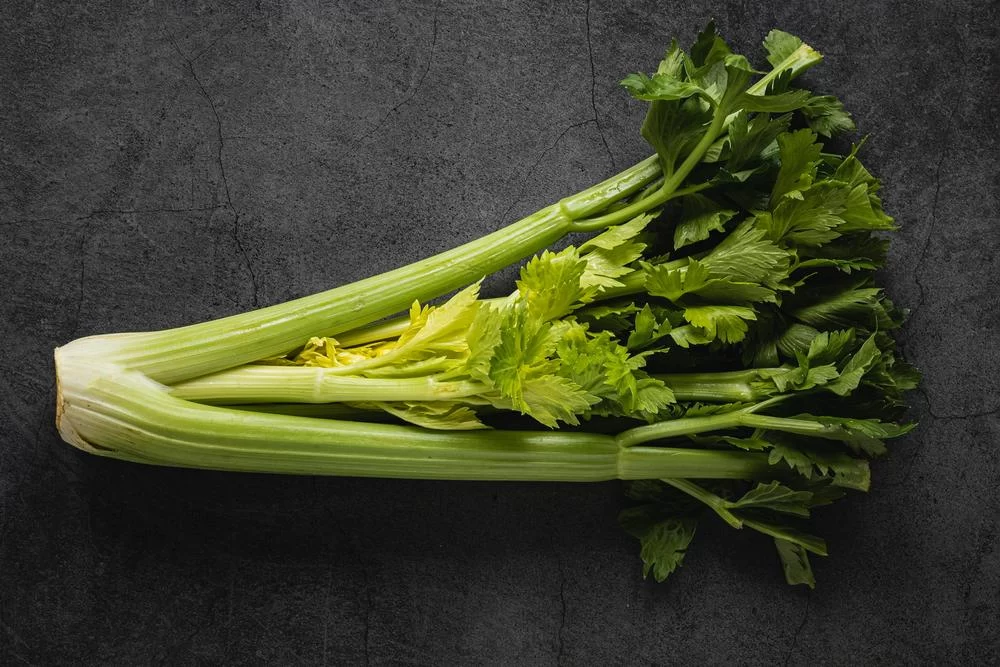
Celery (both stalks and root) is one of the safest and most commonly recommended foods for people with type 2 diabetes. It is a prime example of a non-starchy vegetable with minimal impact on blood glucose levels and a wide range of beneficial properties.
Why is celery especially beneficial for type 2 diabetes?
Minimal impact on blood sugar.
This is the key advantage. One hundred grams of raw celery stalks contain only 1.5–2 g of digestible carbohydrates and about 1.5 g of fiber. Its glycemic index (GI) is 15, which is very low. A serving of celery requires little to no consideration in carbohydrate exchanges.“Negative” calories (in a conventional sense).
The body expends nearly as much energy digesting celery as it gains from it. This makes celery ideal for low-calorie diets aimed at weight loss—the primary factor in improving insulin resistance.High fiber content.
Fiber slows the absorption of carbohydrates from other foods when celery is eaten as part of a meal, promoting a smoother rise in blood glucose levels.Rich vitamin and mineral profile with low calorie density:
Vitamin K: important for bone health and blood clotting.
Potassium: helps regulate blood pressure, which is critically important in diabetes.
Folate, vitamin A, antioxidants (flavonoids).
Apigenin: a biologically active compound with anti-inflammatory properties. Chronic inflammation is one of the factors involved in the development of type 2 diabetes.
Sodium-balancing diuretic effect.
Celery has a mild diuretic action, but unlike medications, it does not deplete potassium—in fact, it provides it. This may help with mild fluid retention.Culinary versatility.
Celery can be eaten raw, boiled, baked, stewed, or used as a base for soups and smoothies.
Possible risks and precautions
Individual allergy.
Rare, but possible.Diuretic effect.
Consuming large amounts of celery juice or stalks may increase urination. People with kidney stones should consult a doctor, as celery contains oxalates.Interactions with medications.
Due to its vitamin K content, people taking anticoagulants (such as warfarin) should keep their intake of leafy greens consistent to avoid fluctuations in vitamin K levels and medication dosage instability. Sudden increases or decreases in celery consumption are not recommended.Celery juice.
Although popular, whole stalks are preferable to juice for people with diabetes. Juice lacks fiber, which is the main regulator of sugar absorption. If consumed, it should be freshly squeezed, in small amounts (50–100 ml), and as part of a balanced meal.
How to properly include celery in a type 2 diabetes diet
As a low-carb snack.
Celery stalks with guacamole or natural Greek yogurt with herbs.As a base for soups and broths.
Adds flavor without excess calories or carbohydrates.As a salad ingredient.
Add raw stalks and leaves to any vegetable salad.As a side dish.
Stewed or baked celery (root or stalks) pairs well with fish, chicken, or turkey.In smoothies.
Adding 1–2 stalks to a vegetable or berry smoothie boosts fiber without raising blood sugar.“Boats” for spreads.
Celery stalks can be filled with cottage cheese mixed with herbs or an avocado spread.
Practical portion advice
You can safely consume 200–300 g of celery per day without any risk to blood glucose levels. It helps increase meal volume without increasing calorie or carbohydrate load.
Key takeaway
Celery is an almost ideal food for a diabetes-friendly diet.
Recommended: consume regularly, raw or cooked, as a standalone snack or part of main meals.
Benefits: promotes satiety, supports weight loss, does not raise blood sugar, has anti-inflammatory effects, and provides essential micronutrients.
Precautions: if you have comorbid conditions (such as kidney stones or are taking warfarin), discuss appropriate amounts with your doctor.
Important: celery is a component of a healthy diet, not a medicine. It cannot replace medication, physical activity, or overall dietary control, but it is an effective and safe supportive food.