

Crab Imitation: Friend or Foe for Diabetics? The Whole Truth About Crab Sticks in Type 2 Diabetes
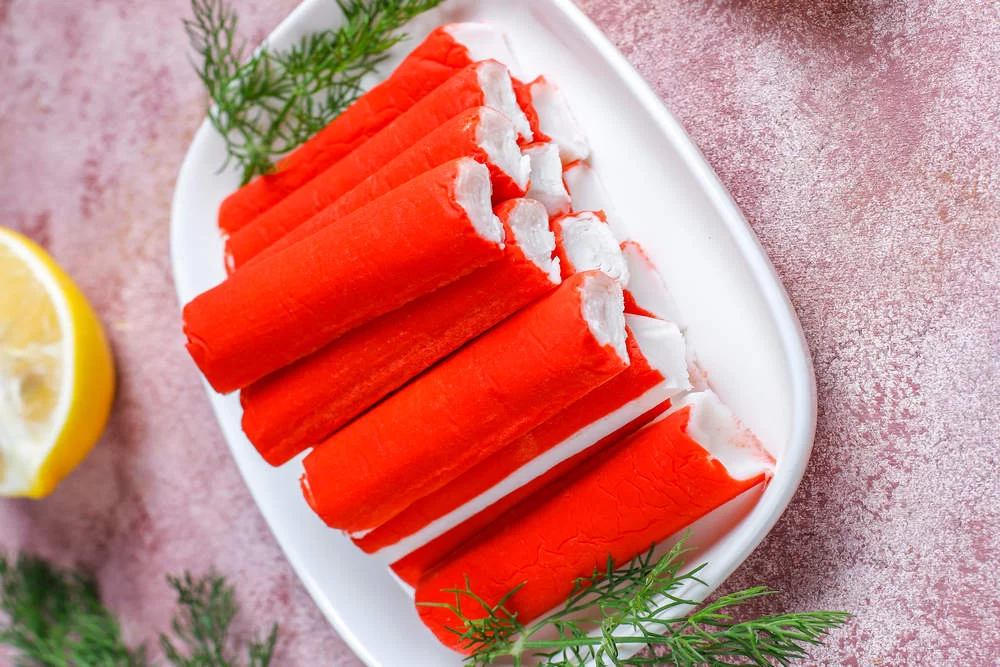
Crab sticks are a mysterious product. On one hand, they are white, low-fat, contain «fish,» and are sold in the dietetic seafood section. On the other hand, their taste is slightly sweet, and their ingredient list is alarming with a long line of E-additives.
For a person with type 2 diabetes, crab sticks fall into a grey zone: they can't be called healthy, but they aren't strictly forbidden either. The main thing is to understand their mechanism of effect on blood sugar and weight.
Composition of Crab Sticks: An Atomic Breakdown
Crab sticks have nothing to do with crabs. They are a product made from surimi — a Japanese word meaning «minced, cleaned fish paste.» Usually, inexpensive white fish is used (pollock, hake, blue whiting).
Basic recipe:
Surimi mince (40-50%) — source of protein.
Starch (potato, corn, tapioca) — the most dangerous component for a diabetic.
Water.
Vegetable oil (usually rapeseed or soybean) — a very small amount.
Salt, sugar, sorbitol (sweetener E420).
Colorings (paprika extract, carmine) and flavorings («crab scent»).
Nutritional value per 100 grams
| Parameter | Amount |
|---|---|
| Calories | 80-100 kcal |
| Protein | 8-10 g |
| Fat | 0.5-2 g |
| Carbohydrates | 12-15 g (this is most important!) |
The carbohydrates are the main alarm signal. In a regular piece of fish, there are almost no carbs (less than 1 g). In crab sticks, there are 12-15 g — due to starch and added sugar.
Glycemic Index and Load
Glycemic Index (GI) of crab sticks = 55-65 units (depending on the manufacturer).
This is a medium indicator, on the border of acceptability. For comparison:GI of fresh pollock = 0.
GI of buckwheat porridge = 50.
GI of white bread = 75-85.
Crab sticks are closer to bread than to fish. This means that after eating them, blood sugar levels will rise moderately quickly, rather than staying put.
The Glycemic Load (GL) for a 150 g portion (a standard pack) would be about 9-10 — this is already a medium value that should make a diabetic cautious.
Allowed or Not? Doctors' Answers
Official position of endocrinologists:
Crab sticks are not forbidden in type 2 diabetes, but they are not recommended as part of a healthy diet. They can be eaten rarely and in small amounts, with perfect diabetes compensation.
That is: if your fasting sugar is 5.5-6.5 mmol/L, and 2 hours after a meal it's 7.5-8.0 — then sometimes it's possible. If you have blood sugar spikes — then no.
POTENTIAL BENEFITS (very conditional)
Low calorie content.Compared to sausage, cheese, or pastry, crab sticks win. They help control weight — a key issue in type 2 diabetes.
Presence of protein.Even 8-10 g of protein per 100 g provides satiety without sugar spikes. Protein slows down the absorption of carbohydrates from starch.
No harmful fats.The product contains virtually no saturated fats or trans fats, unlike mayonnaise, butter, or fatty meat.
Micronutrients.Some phosphorus, selenium, and iodine are preserved in surimi — beneficial for the thyroid gland, which often suffers in diabetes.
DANGERS AND CONTRAINDICATIONS (real ones)
Much more serious than the dubious benefits:
Starch = pure carbohydrates.Once in a diabetic's body, starch is quickly broken down into glucose. In 100 g of sticks, there are about 1.5 tablespoons of potato starch. That's a full-fledged «carbohydrate shock.»
Added sugar and sorbitol.Sugar raises glucose instantly. Sorbitol (E420), although considered a sweetener, causes diarrhea, bloating, and flatulence in excess (more than 30 g per day) — especially in diabetics with gastroparesis.
Salt.Crab sticks contain a lot of salt (1-1.5 g per 100 g). In type 2 diabetes, which almost always combines with hypertension and kidney stress, this poses a risk of edema, increased blood pressure, and progression of nephropathy.
Allergy.The composition often includes egg white (albumin), soy, gluten (wheat starch). For celiac disease or food allergies, crab sticks are prohibited.
Quality and chemicals.Many manufacturers replace part of the fish with soy isolate and add synthetic carmine (E120) for color. Cheap sticks are practically a pure carbohydrate-chemical gel.
Comparison with Other Seafood
| Product (100 g) | Carbs | GI | Recommendation for Type 2 Diabetes |
|---|---|---|---|
| Crab sticks | 12-15 g | 55-65 | Sometimes, on holidays |
| Boiled shrimp | 0 g | ✅ Can be eaten often | |
| Squid | 0 g | ✅ Can be eaten often | |
| Mussels | 3 g | ✅ Can be eaten | |
| Real crab | 0 g | ✅ Excellent (but expensive) | |
| Fish fillet (pollock) | 0 g | ✅ Best choice |
How to Eat Crab Sticks Properly with Type 2 Diabetes (if you really want to)
If you decide to treat yourself:
Portion:No more than 80-100 grams per meal (4-5 sticks), maximum 1-2 times a week.
No sauces:Mayonnaise, sweet chili, tartar — strictly forbidden. They'll double the fats and sugar.
With herbs and cucumber:The best option is a salad of crab sticks, fresh cucumber, leafy greens, and lemon. No corn, rice, or boiled carrots (those are high in carbs!).
Not on an empty stomach:First eat a portion of fiber (cabbage, cucumbers, greens) and protein (egg, chicken breast). This will reduce the absorption rate of starch.
Measure your sugar:1 and 2 hours after eating. If the spike is more than 3 mmol/L from baseline — forget about this product forever.
Read the label:Look for sticks with carbohydrate content below 10 g per 100 g and no sugar in the ingredients (or sugar listed in the last five ingredients).
What NOT to do
❌ Crab salad with rice, corn, and mayonnaise — a carbohydrate bomb of 70-80 g of carbs per serving.
❌ Eating sticks instead of real fish — you'll get starch, not beneficial protein and omega-3.
❌ Buying the cheapest ones — they have minimal fish, maximum starch and water.
❌ Giving sticks to children with diabetes — they have increased sensitivity to starch and colorings.
Summary and Brief Conclusion
| Parameter | Rating for Type 2 Diabetes |
|---|---|
| Carb safety | 🟡 Medium (12-15 g carbs) |
| Glycemic Index | 🟡 Medium (55-65) |
| Effect on weight | 🟢 Good (low calorie) |
| Effect on blood pressure | 🔴 Bad (high salt) |
| Nutritional value | 🟡 Low (few vitamins) |
| Frequency of consumption | 1-2 times a week, up to 100 g |
| Best way to eat | With cucumber and greens, no sauces |
Golden Rule:Crab sticks are a dessert-like snack for a diabetic, not a source of protein. If you crave seafood — buy shrimp, mussels, or frozen pollock fillet. They cost the same or less, but will bring 10 times more benefit and zero harm to your blood sugar.
And most importantly: never eat crab sticks in the form of a salad with rice and corn — this guarantees a blood sugar spike up to 12-15 mmol/L, even in a compensated diabetic.
If you have type 2 diabetes with obesity and high blood pressure (a classic combination), it's best to eliminate crab sticks from your diet altogether. You don't need the salt and starch.